
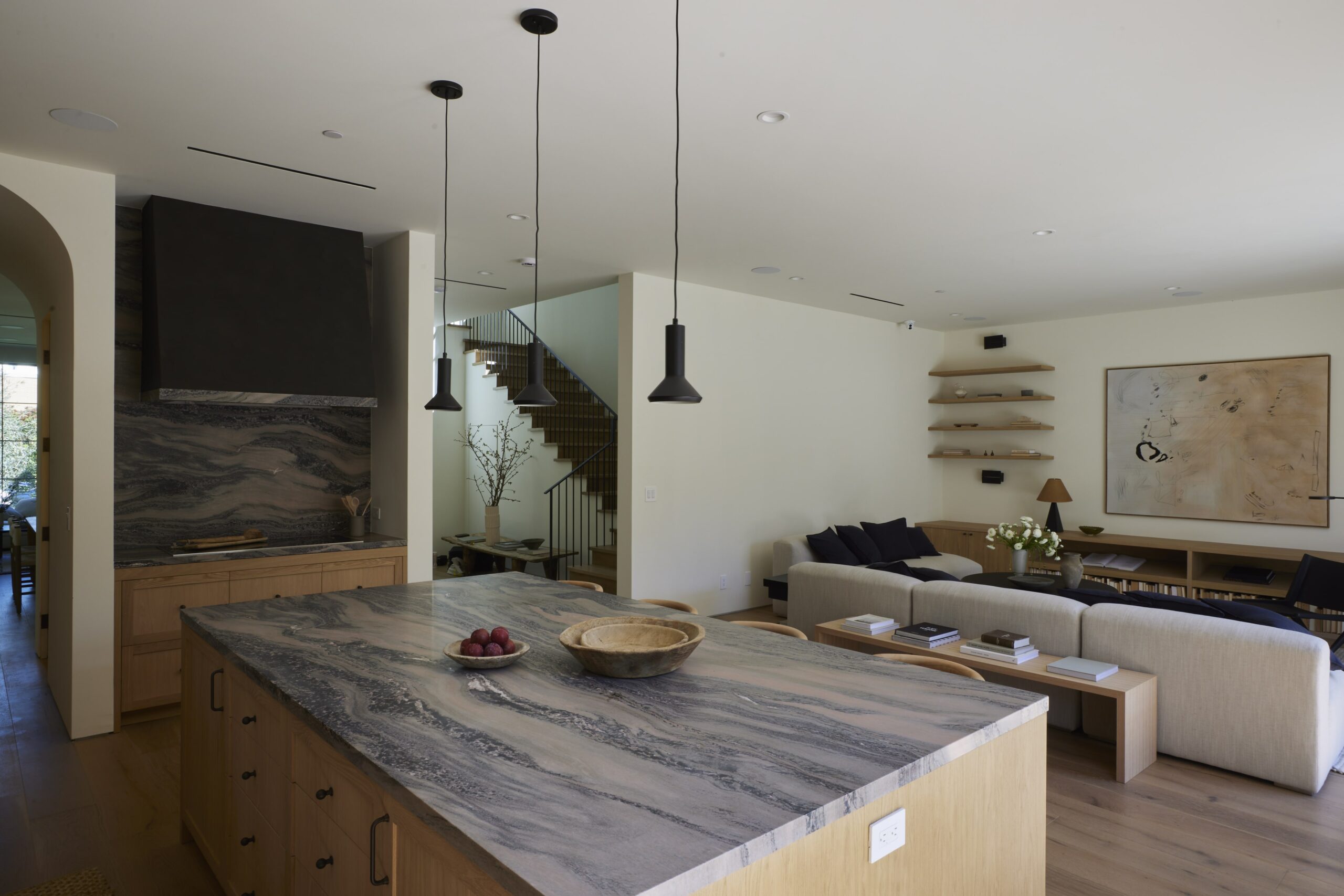
When remodeling your kitchen or bathroom, countertops set the tone for the entire space. They’re a major design statement, a hardworking surface, and a key factor in your home’s value. Among the most popular choices are natural stone (like marble, granite, and quartzite) and engineered quartz. But which is right for you?
Let’s break down the pros, cons, and considerations so you can make a choice that’s as beautiful as it is practical.
What to Consider When Choosing Countertops
Selecting the perfect countertop is about more than looks. Here are the main factors that should guide your decision:
- Aesthetics & Style – Do you want dramatic veining, natural variation, or a perfectly consistent finish?
- Durability & Maintenance – How much sealing, cleaning, or care are you willing to commit to?
- Cost & Long-Term Value – Think about both upfront investment and how the material will age over time.
- Performance & Practicality – Consider how you cook, entertain, and clean — your countertops should work as hard as you do.
- Sustainability – Some homeowners prioritize low-VOC resins, recycled content, or locally sourced materials.
Natural Stone: Timeless and Unique
Why Homeowners Love It
Natural stone has been the go-to choice for centuries, and for good reason. Each slab is one of a kind, with veining, color variation, and depth you simply can’t replicate.
Strengths of Natural Stone
- Unique Beauty: No two slabs are identical, creating a truly one-of-a-kind kitchen.
- Prestige & Luxury Appeal: Marble countertops, for instance, are seen as a design classic.
- Longevity: With proper care, natural stone can last decades and develop a beautiful patina.
- Heat Resistance: Granite and quartzite can handle hot pots better than most surfaces.
Things to Consider
Natural stone requires regular sealing to stay stain-resistant, and some stones, like marble, can etch or scratch more easily. Costs vary widely depending on rarity and origin, and installation often requires skilled craftsmen.
Engineered Quartz: Sleek and Low Maintenance
Why Homeowners Choose It
Engineered quartz offers the look of stone with added practicality. Made from ground quartz mixed with resins and pigments, it’s non-porous, uniform, and nearly maintenance-free.
Strengths of Quartz
- Low Maintenance: No sealing required, and it’s highly stain-resistant.
- Design Flexibility: Available in a wide range of colors, patterns, and finishes.
- Consistency: Uniform appearance is ideal if you want a clean, controlled look across a large kitchen island or multiple countertops.
- Durability: Highly resistant to scratching and chipping, perfect for busy households.
Things to Consider
Quartz can discolor with extreme heat, so always use trivets. While it mimics stone beautifully, it may lack the depth and movement of natural slabs, and some homeowners prefer the authenticity of real stone.
Which is Right for You?
- Choose Natural Stone If: You love organic variation, are willing to invest in maintenance, and want a truly unique, high-end look.
- Choose Quartz If: You prioritize easy care, prefer consistent patterns, and want a material that stands up to heavy daily use with minimal upkeep.
Natural Stone vs. Engineered Quartz: At a Glance
| Feature | Natural Stone (Marble, Granite, Quartzite) | Engineered Quartz |
| Appearance | Unique, one-of-a-kind veining and color variations for a truly custom look | Consistent patterns and colors, ideal for a uniform, modern aesthetic |
| Maintenance | Requires periodic sealing, may be prone to etching or staining depending on stone | Virtually maintenance-free: non-porous, stain-resistant, no sealing required |
| Durability | Highly durable but softer stones like marble can scratch or etch | Extremely durable, resistant to scratching, chipping, and staining |
| Heat Resistance | Granite and quartzite handle heat well; marble is more delicate | Sensitive to high heat; trivets recommended to prevent discoloration |
| Cost Range | Varies widely based on rarity, source, and slab size; installation can be complex | Typically mid-to-high price, more predictable costs and less waste |
| Sustainability | Natural product, but quarrying has an environmental impact | Often contains recycled materials; manufacturing uses resins (VOC considerations) |
| Overall Look & Feel | Luxurious, organic, and timeless — each slab is truly unique | Sleek, uniform, and modern — perfect for a minimalist, low-maintenance home |
Designer Tips for Choosing
- See Full Slabs: Small samples don’t capture movement and veining. Always view full slabs before committing.
- Consider Lighting: Natural and artificial light can affect how countertops look.
- Match to Your Lifestyle: Consider how you cook, whether you entertain often, and how much upkeep fits your schedule.
- Balance with Cabinetry: Countertops should complement your cabinetry finish, flooring, and backsplash for a cohesive look.
Final Thoughts: Natural Stone Countertops vs. Engineered Quartz
When remodeling your kitchen, both natural stone and engineered quartz can be stunning choices. The best option depends on your priorities: whether that’s uniqueness, easy maintenance, or timeless luxury.
Partnering with a design-build expert like Concept Renovations ensures proper selection, fabrication, and installation so your countertops look beautiful and perform for years to come.
Schedule a consultation to view stone slabs, compare quartz samples, and find the perfect fit for your dream kitchen.